



The Strategic Advantage Of Long-Term Thinking

A financial advisor walks alongside a retired couple on a riverside path, engaged in a thoughtful conversation about their long-term financial future.
Discover how Financial Gravity's Turnkey Multi-Family Office Charter helps advisors build lasting enterprise value through disciplined, long-term thinking.
Facebook
Twitter
LinkedIn
Email

Most businesses are pulled toward the urgent. Enduring institutions keep one eye on the important, which is harder than it sounds when the urgent is standing in your doorway holding a spreadsheet and asking whether this can be handled “before lunch.”

The current AI infrastructure boom offers a useful illustration. This week, TeraWulf announced a 20-year, roughly $19 billion lease with Anthropic for a Kentucky AI data center campus, a deal expected to begin operations in late 2027 and fully ramp in 2028. That is not a quarterly bet. That is a long-horizon decision in a market where most people can barely stay calm through a bad Tuesday.

Advisory firms could learn something from that. Not because every RIA should start converting industrial sites into data centers, although there is probably a conference panel somewhere already working on that angle. The lesson is simpler: real advantage often belongs to firms willing to build for a future that is not yet fully visible.

Short-term thinking has a way of disguising itself as discipline. A firm chases an immediate recruiting opportunity because the numbers look good. It adds a service line because competitors are talking about it. It changes messaging because a market headline made everyone nervous. It postpones culture work because revenue is more urgent. It delays technology investment because the current system is “fine,” which usually means everyone hates it but has developed elaborate coping rituals.

Over time, those choices add up. Decisions become reactive. Incentives distort priorities. Strategic opportunities get overlooked because no one has time to lift their head. Branding becomes a collection of disconnected campaigns rather than a deliberate expression of what the firm is becoming. Culture grows vulnerable because it is being managed by accident. Leadership loses perspective, and the business starts responding to whatever is loudest.

The trouble is that advisory firms are supposed to be long-term thinkers. That is the job. Advisors spend their careers telling clients not to confuse temporary volatility with permanent impairment. They encourage patience, discipline and perspective. Then many turn around and run their own firms as if the next quarter were the only scoreboard that matters. This is not hypocrisy exactly. It is human nature with a revenue target.

Institutional firms resist that pull. They build planning horizons measured in years and decades, not months and quarters. They ask different questions. What kind of clients do we want to serve five years from now? What capabilities will those clients need? What culture must we protect as we grow? What technology investments will make our advice more consistent, not merely more efficient? What should we stop doing because it no longer fits the future we say we are building?


Learn how to double or triple your revenue with Financial Gravity's Turnkey Multi-Family Office Charter


That last question is especially useful. Long-term thinking is not just about adding things. It is about refusing distractions. A durable strategy requires the discipline to say no to opportunities that look attractive but pull the firm off course. Not every new client is a good client. Not every acquisition strengthens the culture. Not every technology tool deserves a pilot program, despite the vendor’s passionate belief that it will “transform engagement.”

Technology and innovation do belong in the conversation, but not as decorations. They should become measurable strategic priorities. Firms should know whether technology is improving advisor capacity, client experience, follow-through, decision quality or data visibility. Innovation as theater is expensive. Innovation as a KPI can be powerful.

The same applies to culture. Firms love to talk about culture when recruiting, merging or explaining why the last operations meeting felt like group therapy. But culture is only strategic if it is invested in consistently. Long-term firms develop leaders, document principles, reward behavior that supports the mission and protect the client experience from becoming whatever the busiest advisor can manage that week.

Warren Buffett’s line still fits: “The stock market is a device for transferring money from the impatient to the patient.” The same could be said of enterprise value in advisory firms. Impatient firms chase production. Patient firms build institutions. Impatient firms react to noise. Patient firms compound trust, capability and brand clarity.

Clients feel the difference. They may not ask to see the strategic plan, but they experience the consequences of whether one exists. They notice consistency. They notice clarity. They notice whether the firm seems to be building around their future or merely reacting to its own.

The ability to think long-term may be one of the most underappreciated competitive advantages available to advisory firms today. It is not flashy. It rarely produces instant applause. But it shapes every decision that matters: people, process, technology, culture, client experience and brand.

The urgent will always be there. The important has to be chosen.

The firms that build lasting enterprise value share one trait that rarely appears on a recruiting brochure or a pitch deck: they made a deliberate decision, at some specific moment in their history, to stop running their practice and start building an institution. That decision is rarely dramatic. It usually begins with a single conversation, one where someone finally asks not what the firm needs this quarter, but what it’s actually becoming.

That conversation is available to you. Financial Gravity works with advisory firms at exactly that inflection point, where the urgent and the important are finally ready to be sorted. If something in this piece resonated, we’d welcome the chance to explore what long-term thinking could look like as a practice management strategy for your firm. Learn more by watching this short video.


The 10X Financial Advisor

Why do some advisors achieve elite levels of success while half don’t even make it to six figures? This is the key question for 99% of financial advisors. Author and serial entrepreneur Scott Winters examines this question in depth, providing real-life examples of advisors who made the leap. Learn the secrets advisors nationwide have employed to see an order-of-magnitude increase in revenues and business valuation. The 10X Financial Advisor is a must-read for every advisor seeking elite success.

Your Complimentary Offer Includes

10X Financial Advisor Audio Book | 10X Financial Advisor eBook | 10X Financial Advisor Hardcover edition | 10X Financial Advisor Academy Access | Membership to the 10X Club

Subscribe to the 10X Financial Advisor Newsletter

Picture of Scott Winters

Scott Winters

Scott Winters is the CEO of Financial Gravity and the author of The 10X Financial Advisor (named as one of the best 8 books every financial advisor should read by Smart Asset). A leader in the financial services industry, Scott is committed to helping advisors break free from outdated models and transition into high-value Family Office Directors.

Take the First Step to Scaling Your Practice

Latest Issues of the 10X Financial Advisor Newsletter

A financial advisor meets with a couple in a modern office, guiding a thoughtful discussion focused on simplifying their financial planning.

The Competitive Power of Simplicity

Simplify growth with Financial Gravity’s Turnkey Multi-Family Office Charter, helping advisors scale through standardized, coordinated service.
A financial advisor reviews long-term financial performance with a client while using modern analytics to support strategic planning.

Some Revenue Is More Valuable Than Others

Learn how Financial Gravity’s Turnkey Multi-Family Office Charter helps advisors build durable revenue through deeper client relationships and scalable business design.
An experienced financial advisor walks through a collaborative office where team members consistently deliver a shared client experience.

Scaling Without Losing Your Culture

Learn how Financial Gravity’s Turnkey Multi-Family Office Charter helps advisors preserve culture while scaling teams, client service, and long-term enterprise value.

As Seen on FA Magazine

Latest Press Releases

Investor Relations

January 23, 2026

Financial Gravity Reports Strong First Quarter Fiscal 2026 Results

Investor Relations

January 13, 2026

Financial Gravity Featured as Case Study in New Business Book

Investor Relations

November 12, 2025

Financial Gravity Reports Profitability for September and October 2025; Expects Continued Profitability in November

Latest Articles

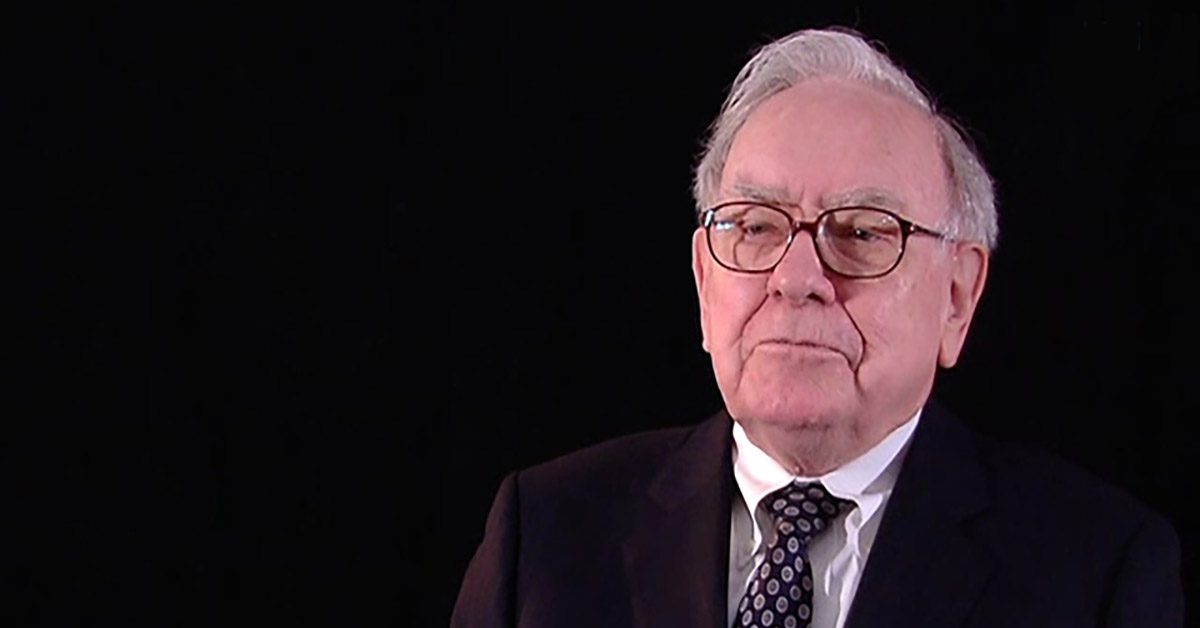
Warren Buffett in a suit and tie, seated against a black background, reflecting on investing principles—anchoring the message of Financial Gravity’s market guidance.

Bubbles, Bears, and Buffett

Market volatility is a feature, not a flaw. Discover timeless lessons from Warren Buffett and how Financial Gravity helps advisors guide clients through uncertainty.
Confident female financial advisor smiling in a modern office, representing the value of active wealth management powered by Financial Gravity.

Shout Your Fee: Why Active Wealth Managers Are Worth Every Penny

Show your value, don’t hide your price. Learn how Financial Gravity empowers advisors to justify premium fees with personalized, full-spectrum wealth services.
Financial advisor presents market research insights, highlighting the shift toward holistic, tech-driven wealth management for affluent clients.

Data-Driven Marketing

Mass affluent clients want holistic planning, transparency, and tech-driven advice. Market research reveals what wins in today’s financial advisory world.
A happy senior couple shakes hands with a financial advisor in an office setting, symbolizing trust and successful financial planning with Financial Gravity.

In Praise of Family Offices for All

The family office model is no longer exclusive to the ultra-wealthy. Discover how Financial Gravity is bringing scalable, comprehensive wealth management solutions to independent financial advisors, enabling them to serve clients more effectively while increasing their own productivity and income.
A Financial Gravity Family Office Director, a financial advisor, engaging in a client meeting, demonstrating how delegation maximizes efficiency and revenue growth.

The Delegation Mindset

Elite financial advisors succeed by mastering delegation. Learn how Financial Gravity’s Done For You model empowers Family Office Directors to focus on client relationships, boosting productivity and income.
A confident financial advisor in a modern office, representing the evolution of advisors who embrace Financial Gravity’s Turnkey Multi-Family Office model to provide holistic wealth management solutions.

The Evolution of the Financial Advisor

The financial services industry is evolving, and Financial Gravity helps advisors thrive with its Turnkey Multi-Family Office Charter. Elevate your practice with holistic, conflict-free wealth solutions that deliver maximum client value.

Sign Up for The Briefs

Over 20,000 CPAs, tax professionals, and financial advisors subscribe to The Briefs. Subscribe now to receive expert insight on growing your business, links to the latest Tax Beat and Tax Tactics articles. You will also receive invitations to webinars, events, and special offers. Published weekly.