



How Trust Impacts Enterprise Value

A financial advisor walks beside a longtime client while talking in a landscaped business district after a meeting.
Financial Gravity helps advisors build lasting enterprise value through trust, operational excellence, and its Turnkey Multi-Family Office Charter.
Facebook
Twitter
LinkedIn
Email

RIA dealmaking started 2026 at a sprint, with 93 transactions announced in the first quarter, tying the most active quarter on record. Buyers are not merely counting assets and applying a cheerful multiple anymore. They are looking at leadership depth, client retention, cultural continuity and whether the firm can function after the founder stops answering email from vacation. In other words, the market is putting a price on trust, even if nobody has figured out where to list it on the balance sheet.

Most advisors understand trust at the relationship level. A client shares private fears, family complications and financial decisions that seemed perfectly reasonable before being spoken aloud. The advisor listens, advises, follows through and earns confidence over time. That is the foundation of the business.

But enduring firms understand something deeper: trust can become an enterprise asset. Properly built, it strengthens retention, referrals, culture, succession and valuation long after any one advisor steps aside. Mishandled, it remains trapped inside a single relationship and walks out the door whenever that person retires, leaves or finally decides that responding to weekend texts is not a fiduciary duty.

The problem is that many firms still treat trust as personal rather than organizational. Clients trust Susan because Susan remembers their children’s names, understands the family business and knows that “we should revisit this later” really means “please bring it up again when I am less anxious.” That bond is valuable. It is also fragile if Susan is the only person who can deliver the experience.

Founder-centered firms often look stronger than they are. Revenue grows. Referrals arrive. Clients stay loyal. Meanwhile, the founder remains central to every relationship, exception, introduction and important decision. Growth can disguise this dependency for years, like a fresh coat of paint over a load-bearing crack.

Then succession arrives.


Learn how to double or triple your revenue with Financial Gravity's Turnkey Multi-Family Office Charter


If client confidence rests primarily with one advisor, continuity becomes vulnerable. Referrals slow because the next generation of leaders has never been made visible. Staff members are capable but under-empowered. The brand may be well known, yet clients still describe the relationship by saying, “I work with Tom.” Buyers hear that sentence differently. They hear concentration risk with a first name.

This is why trust affects enterprise value. Mercer Capital has noted that firms pairing strong client retention with differentiated service models can command premium valuations, while weak next-generation leadership creates continuity discounts. Buyers are underwriting whether confidence belongs to the institution or merely resides with the founder. Trust that transfers is durable. Trust that does not transfer becomes an earnout negotiation.

Institutionalizing trust does not mean replacing human relationships with scripts and automated birthday emails. It means creating enough structure that reliability survives normal human limitations. A well-used CRM should do more than store contact notes and remind someone to send a holiday card. It should manage recurring processes, assign responsibilities, track commitments and make ownership visible. Clients should not have to depend on one advisor’s memory for the firm to keep its promises.

Trust must also spread across the team. Staff members need authority, not just access to meetings. Clients should hear thoughtful answers from more than one person and see that the relationship is supported by a functioning organization. That requires founders to introduce colleagues early, share context and allow others to lead meaningful parts of the work. Empowerment feels risky to founders because control feels like quality. Often, control is simply the habit that keeps the firm dependent.

Transitions deserve the same discipline. Communicate early and often. Explain what is changing, what is not, who owns each responsibility and why the transition benefits the client. Surprises are excellent for birthday parties and spectacularly bad for succession planning.

Stephen R. Covey wrote, “Trust is the glue of life. It’s the foundational principle that holds all relationships.” In an advisory firm, that glue must bind more than one advisor to one client. It must connect the client to the team, the process, the culture and the promise of continuity.

The strongest firms do not merely earn trust. They institutionalize it through repeatable service, transparent communication, empowered teams and a culture of stewardship. That is how confidence survives leadership changes and reaches the next generation.

Trust may begin personally. Enterprise value begins when it no longer has to remain that way.

True enterprise value emerges when client confidence extends beyond the founder and becomes embedded in the team, the process, the culture and the client experience itself. That is one reason the Multi-Family Office model continues to resonate with forward-thinking advisors.

At Financial Gravity, we help advisors build organizations designed around continuity, collaboration and institutional trust. By surrounding clients with coordinated expertise and creating systems that support consistent service delivery, advisors can strengthen client relationships while reducing founder dependency. Learn more by watching this short video.
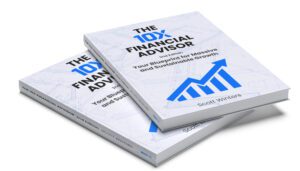

The 10X Financial Advisor

Why do some advisors achieve elite levels of success while half don’t even make it to six figures? This is the key question for 99% of financial advisors. Author and serial entrepreneur Scott Winters examines this question in depth, providing real-life examples of advisors who made the leap. Learn the secrets advisors nationwide have employed to see an order-of-magnitude increase in revenues and business valuation. The 10X Financial Advisor is a must-read for every advisor seeking elite success.

Your Complimentary Offer Includes

10X Financial Advisor Audio Book | 10X Financial Advisor eBook | 10X Financial Advisor Hardcover edition | 10X Financial Advisor Academy Access | Membership to the 10X Club

Subscribe to the 10X Financial Advisor Newsletter

Picture of Scott Winters

Scott Winters

Scott Winters is the CEO of Financial Gravity and the author of The 10X Financial Advisor (named as one of the best 8 books every financial advisor should read by Smart Asset). A leader in the financial services industry, Scott is committed to helping advisors break free from outdated models and transition into high-value Family Office Directors.

Take the First Step to Scaling Your Practice

Latest Issues of the 10X Financial Advisor Newsletter

A senior financial advisor observes younger advisors confidently leading a client strategy meeting in a modern conference room.

The Advisor’s Ultimate Role

Learn how Financial Gravity’s Turnkey Multi-Family Office Charter helps advisors develop leaders, reduce founder dependency, and build firms that scale.
An experienced financial advisor observes a thriving office where team members collaborate independently across multiple client and operational functions.

The Founder Dependency Trap

Learn how Financial Gravity’s Turnkey Multi-Family Office Charter helps advisors build institutions that thrive beyond founder dependency.
An experienced financial advisor leads a strategic planning discussion with her team in a modern conference room.

The 10X Firm Blueprint: What Happens When Growth Becomes a Design Discipline

Financial Gravity’s Turnkey Multi-Family Office Charter helps advisors align systems, teams, and service models for scalable growth.

As Seen on FA Magazine

Latest Press Releases

Investor Relations

January 23, 2026

Financial Gravity Reports Strong First Quarter Fiscal 2026 Results

Investor Relations

January 13, 2026

Financial Gravity Featured as Case Study in New Business Book

Investor Relations

November 12, 2025

Financial Gravity Reports Profitability for September and October 2025; Expects Continued Profitability in November

Latest Articles

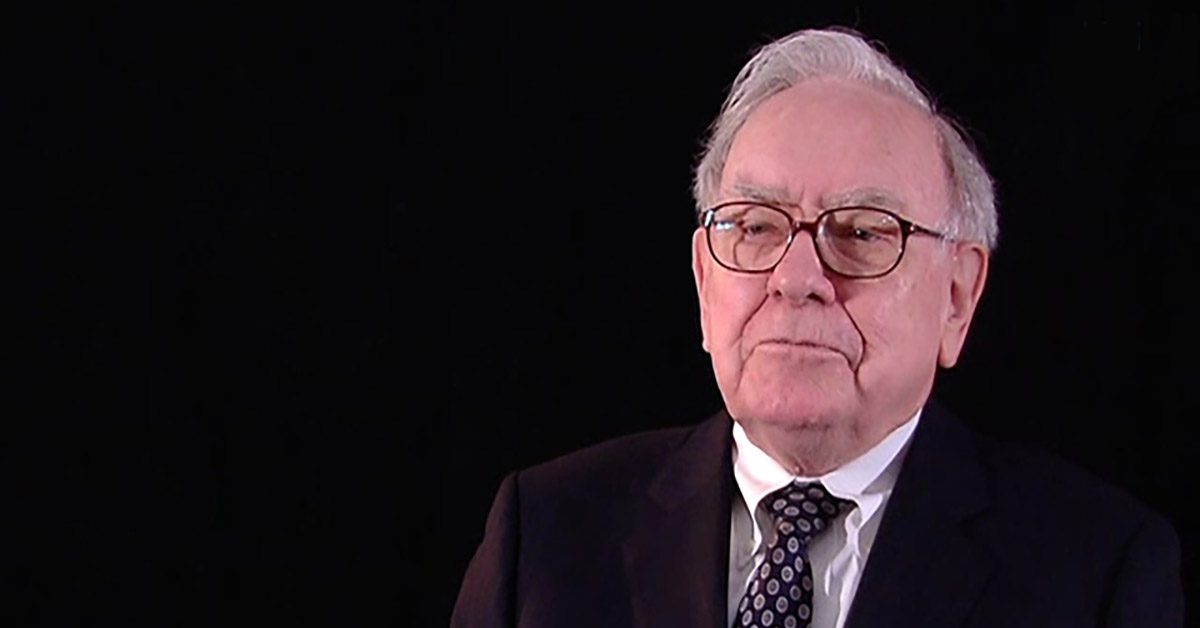
Warren Buffett in a suit and tie, seated against a black background, reflecting on investing principles—anchoring the message of Financial Gravity’s market guidance.

Bubbles, Bears, and Buffett

Market volatility is a feature, not a flaw. Discover timeless lessons from Warren Buffett and how Financial Gravity helps advisors guide clients through uncertainty.
Confident female financial advisor smiling in a modern office, representing the value of active wealth management powered by Financial Gravity.

Shout Your Fee: Why Active Wealth Managers Are Worth Every Penny

Show your value, don’t hide your price. Learn how Financial Gravity empowers advisors to justify premium fees with personalized, full-spectrum wealth services.
Financial advisor presents market research insights, highlighting the shift toward holistic, tech-driven wealth management for affluent clients.

Data-Driven Marketing

Mass affluent clients want holistic planning, transparency, and tech-driven advice. Market research reveals what wins in today’s financial advisory world.
A happy senior couple shakes hands with a financial advisor in an office setting, symbolizing trust and successful financial planning with Financial Gravity.

In Praise of Family Offices for All

The family office model is no longer exclusive to the ultra-wealthy. Discover how Financial Gravity is bringing scalable, comprehensive wealth management solutions to independent financial advisors, enabling them to serve clients more effectively while increasing their own productivity and income.
A Financial Gravity Family Office Director, a financial advisor, engaging in a client meeting, demonstrating how delegation maximizes efficiency and revenue growth.

The Delegation Mindset

Elite financial advisors succeed by mastering delegation. Learn how Financial Gravity’s Done For You model empowers Family Office Directors to focus on client relationships, boosting productivity and income.
A confident financial advisor in a modern office, representing the evolution of advisors who embrace Financial Gravity’s Turnkey Multi-Family Office model to provide holistic wealth management solutions.

The Evolution of the Financial Advisor

The financial services industry is evolving, and Financial Gravity helps advisors thrive with its Turnkey Multi-Family Office Charter. Elevate your practice with holistic, conflict-free wealth solutions that deliver maximum client value.

Sign Up for The Briefs

Over 20,000 CPAs, tax professionals, and financial advisors subscribe to The Briefs. Subscribe now to receive expert insight on growing your business, links to the latest Tax Beat and Tax Tactics articles. You will also receive invitations to webinars, events, and special offers. Published weekly.