



The Real Reason Clients Say ‘I Can Do This Myself’ Isn’t Advisor Rejection

A financial advisor reviews detailed financial charts and reports with a client during a strategy discussion.
Financial Gravity’s Turnkey Multi-Family Office Charter helps advisors deliver coordinated advice clients cannot replicate on their own.
Facebook
Twitter
LinkedIn
Email

When clients say, “I can do this myself,” advisors often hear a critique of their expertise. The assumption is that clients are underestimating the complexity of investing, overestimating their own ability or spending too much time on Reddit with people whose retirement plan appears to be a screenshot of a brokerage app.

Usually, though, that is not what they mean.

More often, the statement reflects something else entirely. Clients are not rejecting advice. They are rejecting a version of value that feels interchangeable with what they believe they can already access on their own. And, to be fair, they are not hallucinating this. The barriers to investing have collapsed. Platforms that began as simple retail trading apps are moving further into affluent households with broader product sets and premium offers, while retail investors continue to play a meaningful role in market activity. In March alone, Reuters reported that small investors were buying into market weakness during the recent oil-shock volatility, and Robinhood has been pushing further upmarket with new premium products.

That matters because when advisory firms anchor their value proposition too tightly to asset allocation, product selection or performance, they invite a direct comparison to tools. And tools are getting better, cheaper, faster and less interested in sending a holiday card.

This is the real problem. DIY investing is not primarily a threat to expertise. It is a threat to poorly framed expertise.

For the past decade, technology has steadily transformed investment implementation into a commodity. Research is widely available. Portfolio construction is easier than ever. Planning software has become accessible enough that many clients can produce something that looks impressively sophisticated right up until life happens. If the advisor’s pitch sounds like a more polished version of software the client already sees online, the client’s conclusion is rational: if the value sounds replicable, it feels optional.

That conclusion becomes even more understandable in markets like this one. Over the last week, global markets have been jerking around on oil shocks, inflation fears, central-bank suspense and the general modern pastime of pretending nobody notices how fragile confidence really is. Reuters reported global equity funds saw their biggest outflows since December as oil-shock fears hit sentiment, while broader markets remained cautious even after a rebound on March 16. In that kind of environment, clients do not merely want implementation. They want interpretation. They want help deciding what matters, what does not, and what not to do in a moment specifically engineered to make human beings do regrettable things.


Learn how to double or triple your revenue in one year with Financial Gravity's Turnkey Multi-Family Office Charter


That is why “I can do this myself” is usually less about investing and more about positioning. When client conversations revolve around portfolios instead of decisions, the advisor sounds like a manager of inputs rather than a guide to outcomes. When value is explained abstractly rather than experienced tangibly, pricing becomes harder to defend. Basis points feel expensive when the benefit seems like a cleaner spreadsheet.

Clients rarely attempt to replace advice that is clearly positioned around judgment, coordination and consequence management. Technology can execute tasks. It cannot replicate context, accountability or integrated decision-making. It cannot sit with a business owner deciding whether to sell, gift, recapitalize or wait. It cannot coordinate the tax implications of a concentrated stock position with estate planning, liquidity needs and family dynamics. It cannot tell a client, calmly and credibly, that the real risk is not today’s headline but the decision they are about to make because of it.

DIY tools manage tasks; advisors manage consequences.

That distinction should change the entire conversation. The advisor’s role is not to defend complexity for its own sake, as if the client should be grateful that finance is annoyingly complicated. The role is to make value visible in the places where complexity creates consequences. That means shifting the conversation from performance to decision impact. It means making tradeoffs explicit instead of implied. It means showing clients how taxes, estate strategy, risk management and investments interact in real life, not in four separate meetings with four separate professionals who each believe they are the main character.

This is where family office disciplines quietly outperform generic advice models. They make value visible through coordination. They show clients that the real benefit is not a product but a process of integrated judgment over time. The client may still use excellent tools. They simply stop confusing tools with leadership.

Advisors who reposition their value this way often find that DIY objections begin to fade on their own. Clients stop asking whether they can do it themselves and start asking a more honest question: what happens if they do, but miss the bigger picture?

DIY investing is not a threat to advice. It is a mirror. When clients say they can do it themselves, they are revealing something important about how value is being communicated. The answer is not to defend credentials, recite complexity or act offended that a client owns an app.

The answer is to clarify purpose.

Advisors who anchor their role in outcomes, coordination and long-term judgment remove themselves from the DIY comparison entirely. What remains is not a product to be priced against software. It is a partnership built around decisions that actually matter.

That is exactly where Financial Gravity creates separation. Through the Turnkey Multi-Family Office Charter, advisors gain the structure to deliver coordinated, outcome-focused advice that goes far beyond what any tool can replicate, making value tangible in the moments that matter most. Learn more by watching this short video.
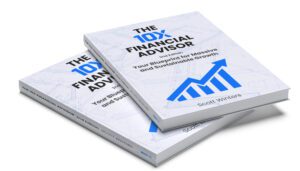
The 10X Financial Advisor

Why do some advisors achieve elite levels of success while half don’t even make it to six figures? This is the key question for 99% of financial advisors. Author and serial entrepreneur Scott Winters examines this question in depth, providing real-life examples of advisors who made the leap. Learn the secrets advisors nationwide have employed to see an order-of-magnitude increase in revenues and business valuation. The 10X Financial Advisor is a must-read for every advisor seeking elite success.

Your Complimentary Offer Includes

10X Financial Advisor Audio Book | 10X Financial Advisor eBook | 10X Financial Advisor Hardcover edition | 10X Financial Advisor Academy Access | Membership to the 10X Club

Subscribe to the 10X Financial Advisor Newsletter

Picture of Scott Winters

Scott Winters

Scott Winters is the CEO of Financial Gravity and the author of The 10X Financial Advisor (named as one of the best 8 books every financial advisor should read by Smart Asset). A leader in the financial services industry, Scott is committed to helping advisors break free from outdated models and transition into high-value Family Office Directors.

Take the First Step to Scaling Your Practice

Latest Issues of the 10X Financial Advisor Newsletter

A financial advisor works focused at a laptop in a quiet office, reviewing priorities during a dedicated block of uninterrupted time.

High-Value Hours: Why the Best Advisors Treat Time Unequally

High-impact advisors protect their best hours. Financial Gravity’s Turnkey Multi-Family Office Charter helps advisors focus on leadership and client value.
Two financial professionals review spreadsheets and planning documents together at a desk while analyzing workflow and operational data.

Eliminating the Hidden Drags: Where Advisors Lose 10 Hours a Week Without Noticing

Hidden inefficiencies steal hours every week. Financial Gravity’s Turnkey Multi-Family Office Charter helps advisors eliminate friction and scale smarter.
A financial advisor reviews and organizes a color coded weekly calendar and planning materials at a desk while preparing priorities for the week.

Your Calendar Is a Mirror: What It Says About Your Role in the Business

Your calendar reveals your role. Financial Gravity’s Turnkey Multi-Family Office Charter helps advisors shift from producer to CEO and scale with clarity.

As Seen on FA Magazine

Latest Press Releases

Investor Relations

January 23, 2026

Financial Gravity Reports Strong First Quarter Fiscal 2026 Results

Investor Relations

January 13, 2026

Financial Gravity Featured as Case Study in New Business Book

Investor Relations

November 12, 2025

Financial Gravity Reports Profitability for September and October 2025; Expects Continued Profitability in November

Latest Articles

Warren Buffett in a suit and tie, seated against a black background, reflecting on investing principles—anchoring the message of Financial Gravity’s market guidance.

Bubbles, Bears, and Buffett

Market volatility is a feature, not a flaw. Discover timeless lessons from Warren Buffett and how Financial Gravity helps advisors guide clients through uncertainty.
Confident female financial advisor smiling in a modern office, representing the value of active wealth management powered by Financial Gravity.

Shout Your Fee: Why Active Wealth Managers Are Worth Every Penny

Show your value, don’t hide your price. Learn how Financial Gravity empowers advisors to justify premium fees with personalized, full-spectrum wealth services.
Financial advisor presents market research insights, highlighting the shift toward holistic, tech-driven wealth management for affluent clients.

Data-Driven Marketing

Mass affluent clients want holistic planning, transparency, and tech-driven advice. Market research reveals what wins in today’s financial advisory world.
A happy senior couple shakes hands with a financial advisor in an office setting, symbolizing trust and successful financial planning with Financial Gravity.

In Praise of Family Offices for All

The family office model is no longer exclusive to the ultra-wealthy. Discover how Financial Gravity is bringing scalable, comprehensive wealth management solutions to independent financial advisors, enabling them to serve clients more effectively while increasing their own productivity and income.
A Financial Gravity Family Office Director, a financial advisor, engaging in a client meeting, demonstrating how delegation maximizes efficiency and revenue growth.

The Delegation Mindset

Elite financial advisors succeed by mastering delegation. Learn how Financial Gravity’s Done For You model empowers Family Office Directors to focus on client relationships, boosting productivity and income.
A confident financial advisor in a modern office, representing the evolution of advisors who embrace Financial Gravity’s Turnkey Multi-Family Office model to provide holistic wealth management solutions.

The Evolution of the Financial Advisor

The financial services industry is evolving, and Financial Gravity helps advisors thrive with its Turnkey Multi-Family Office Charter. Elevate your practice with holistic, conflict-free wealth solutions that deliver maximum client value.

Sign Up for The Briefs

Over 20,000 CPAs, tax professionals, and financial advisors subscribe to The Briefs. Subscribe now to receive expert insight on growing your business, links to the latest Tax Beat and Tax Tactics articles. You will also receive invitations to webinars, events, and special offers. Published weekly.