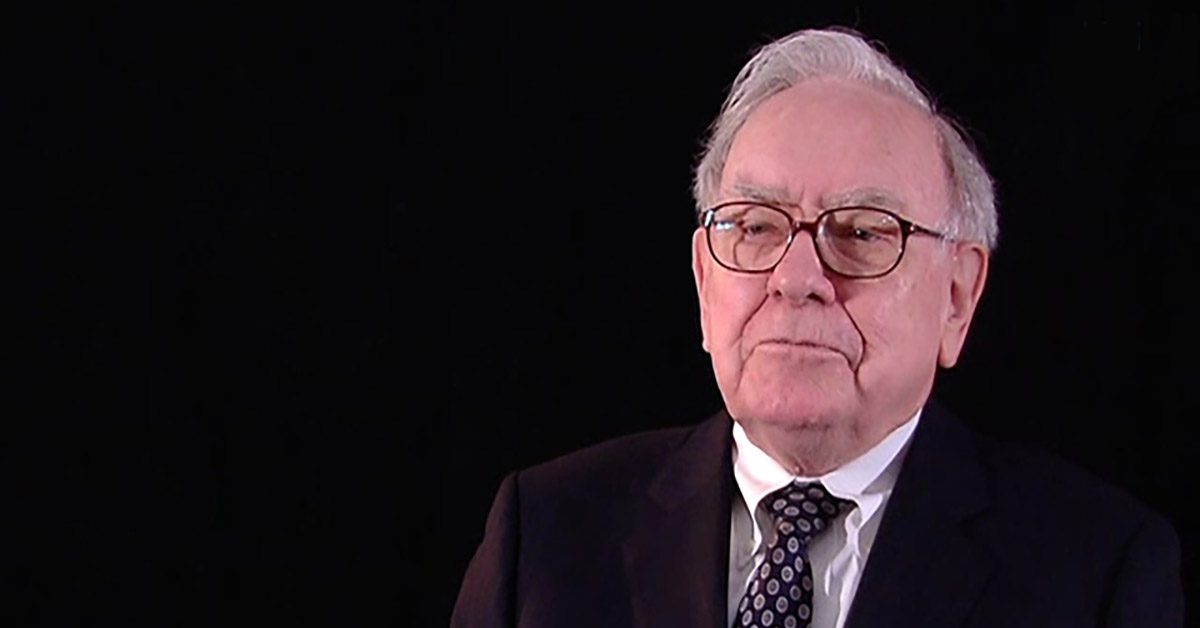




On May 2, 2026, Berkshire Hathaway held its first annual meeting since Greg Abel succeeded Warren Buffett as CEO, and the most revealing part of the day was not the smaller crowd or the nostalgia in the room. It was Abel’s insistence that Berkshire would endure by staying patient, resisting bureaucracy and refusing to force capital into ideas that did not deserve it. Berkshire reported first-quarter operating profit up 18% and cash at a record $380.2 billion, yet Abel’s message was essentially this: discipline still matters more than activity. In a market that often confuses motion with intelligence, that felt almost radical.
Advisors should pay attention, because clients do not seek them out because information is scarce. Information is now cheap, loud and available in industrial quantities. Clients seek advisors because decisions are difficult. The hard part is rarely finding data. The hard part is deciding what matters, what does not, what can wait and what will quietly become a tax problem, liquidity problem, or family problem if someone does not think two moves ahead.
That is why so many firms run into trouble when complex decisions keep arriving in slightly different outfits. A liquidity event here, a concentrated stock position there, an estate strategy on one side of the table and a business transition on the other. Experienced advisors often handle these situations well, but many do it the way veteran cooks make dinner: by instinct, habit and a strong belief that measuring things is for amateurs. It works beautifully until someone else has to repeat it.
Without decision frameworks, every major choice gets treated like a custom production. The advisor starts from scratch, gathers facts in a slightly different order, brings in specialists at different points, explains tradeoffs differently depending on the day and relies on memory to hold the whole thing together. Clients may still get a strong recommendation, but the path to that recommendation can vary wildly from one relationship to the next. Inside the firm, that becomes expensive. New advisors struggle to replicate decision quality. Senior advisors become bottlenecks. Similar client problems somehow require brand-new choreography every time.
This is one of the hidden costs of growth in advisory firms. Growth does not merely add clients. It exposes whether the firm’s expertise lives in a process or in a person. If it lives mostly in a person, then scale starts to feel like strain. Every new relationship demands more judgment, more coordination, more explanation and more hours from the same few people who already know how to navigate the mess. That is not a strategy. That is a stress test wearing a nice blazer.
Long-term thinkers understand something shorter-term operators often miss: repeatability is not the enemy of judgment. It is the way judgment survives contact with reality. The best firms do not standardize the answer. They standardize how the answer gets built.
That distinction matters. A good decision framework does not turn an advisor into a vending machine that spits out the same recommendation no matter what goes in. It simply defines the key questions before the opinion starts running ahead of the facts. What information do we need before evaluating options? Who needs to be in the room before a conclusion is reached? What tax consequences, liquidity constraints, estate implications and behavioral risks have to be surfaced before anyone calls something a good idea? What would make us say no?
That last question is especially underrated. Plenty of advisors know how to explain what could work. Fewer have a consistent process for identifying what should be rejected early. Family offices tend to be better at this, not because they are more dramatic, but because they have learned the cost of sloppy decision sequencing. When money, entities, generations and personalities are all involved, “we’ll figure it out as we go” is not a strategy. It is a future apology.
Structured decision processes also improve the client experience in ways firms often overlook. Clients do not just care about the recommendation. They care about the clarity of the path. They want to understand why certain facts matter, why certain specialists are involved, why one option rises above another and what comes next once a decision is made. When similar issues are explained differently across relationships, clients feel the inconsistency even if they cannot name it. When the process is clear, confidence rises. Not because the decision became simpler, but because the way through it became visible.
This is where advisory firms can borrow something useful from both Berkshire and the family office model. Durable institutions are not built on a single brilliant person improvising forever. They are built on disciplined ways of thinking that can travel across people, across time and across changing circumstances. That is the real strategic advantage of long-term thinking. It does not just improve patience. It improves portability.
Structure strengthens judgment; it does not replace it.
Advisors should probably write that down somewhere visible, ideally before the next client situation that arrives wrapped in urgency and sprinkled with the phrase “this is unique.” Some situations are unique. Most are variations on themes firms have seen before. The opportunity is not to pretend every decision is identical. It is to become consistent in how complexity gets evaluated.
When firms do that, clients gain clarity, younger advisors gain confidence and senior advisors stop carrying the entire intellectual load in their heads like overworked air traffic controllers. The advice gets better because the process gets steadier.
In the end, the firms that manage complexity best are rarely the ones with the most brilliant ad hoc answers. They are the ones that know how complex decisions get made before the pressure arrives. That is not bureaucracy. That is maturity. And in advisory work, maturity scales a lot better than improvisation.
The firms that get this right do not standardize outcomes. They standardize how decisions are made. That shift is subtle, but powerful. It replaces improvisation with a repeatable process, one that can be applied across clients, across advisors and across increasingly complex situations.
This is the discipline that has long defined the family office model, and it is increasingly the standard that firms like Financial Gravity are bringing into broader advisory relationships. For advisors, the question is not whether complex decisions will continue to arrive. It is whether there is a consistent way of navigating them, or whether each one will require starting over. Learn more by watching this short video.